The layer itself
Grown in a bath, not printed in a fab
OPALBLACK is nanoporous anodic aluminium oxide, engineered as a proton-transport medium and read electrically. The chemistry is seventy years old and industrial. The engineering question is whether a layer made this way can hold and modulate analog state well enough to be useful beside a processor.
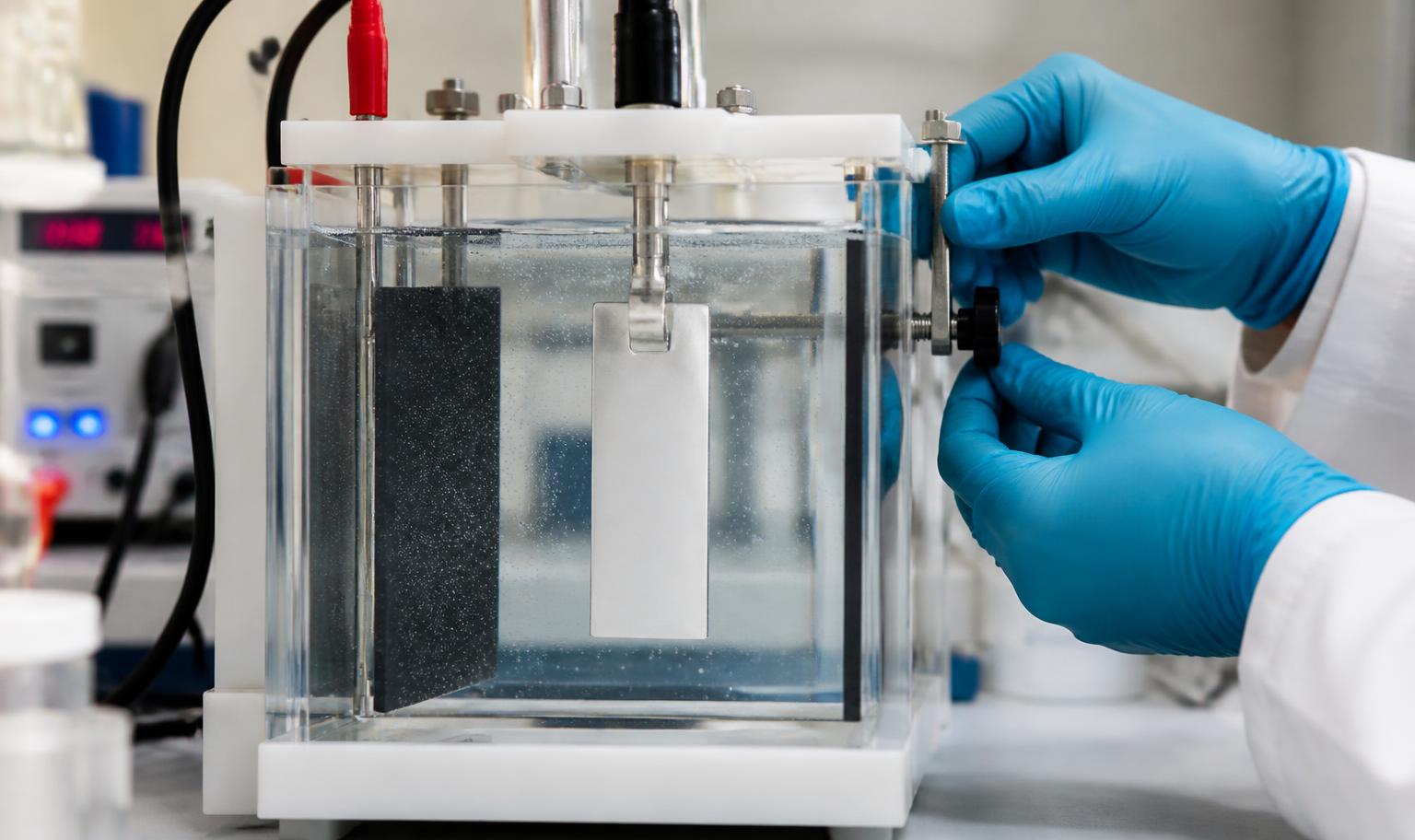
How it is made
Four steps, all of them ordinary
Nothing in this sequence needs a cleanroom, a mask set, or a wafer slot. That is the point of the route, and the reason the cost of being wrong is small.
01
Prepare the aluminium
A clean, electropolished aluminium surface. Purity and finish set the regularity of the pore lattice that follows, so this is the step that most rewards care.
02
Anodise in an acid electrolyte
Passing current through the metal in a bath grows a self-ordering porous oxide. Voltage, temperature and electrolyte choice set pore diameter, pore spacing and barrier-layer thickness — the geometry is tuned by dials, not by lithography.
03
Condition the pore chemistry
Anions incorporated during anodising act as proton donors, and adsorbed water in the pores completes the transport path. Conditioning — drying, rehydration, sealing — is where a passive oxide becomes a controlled proton medium.
04
Contact it and read it electrically
Electrodes above and below the layer allow the state to be written by a small applied bias and read as a conductance. This is the step where the claim becomes testable rather than plausible.
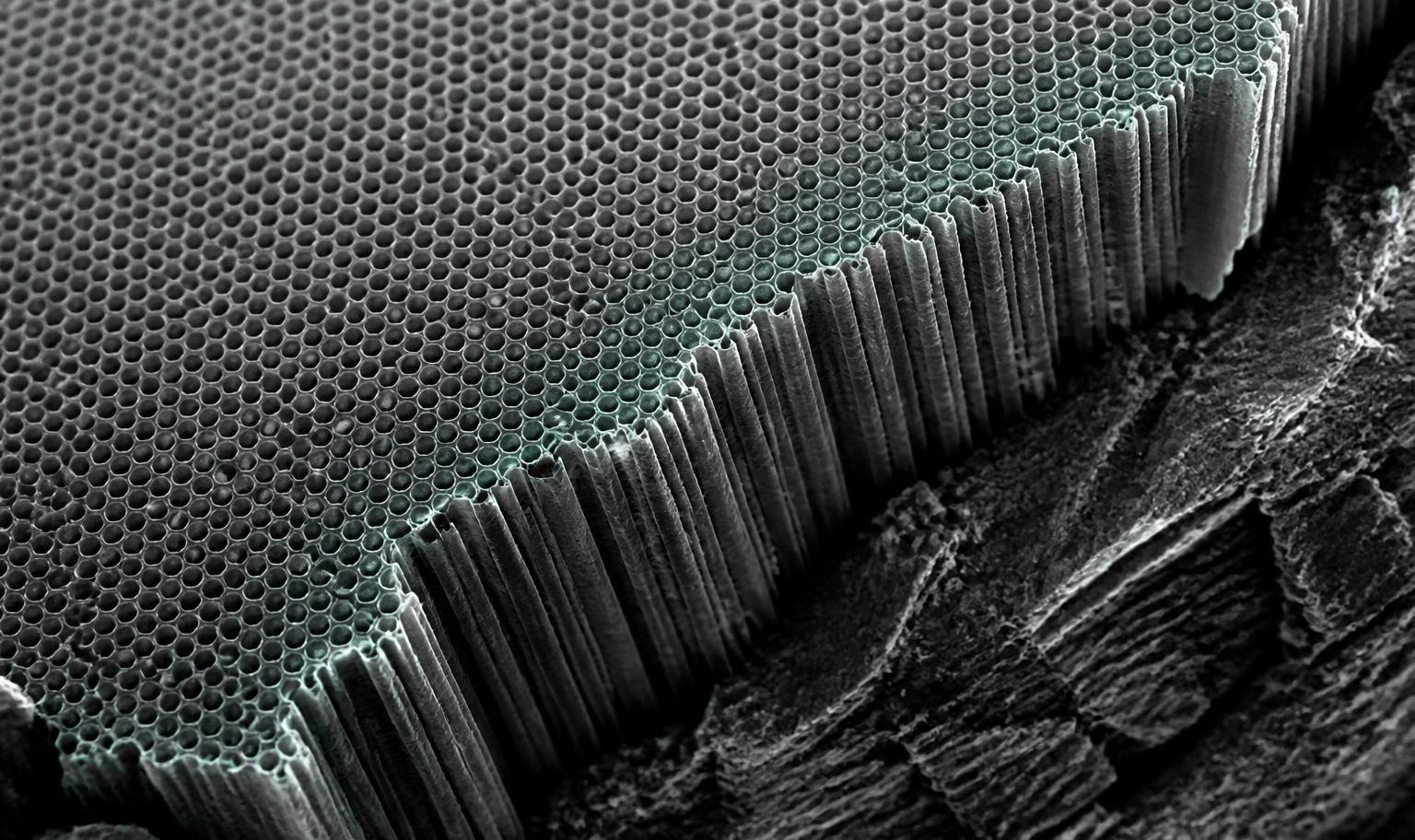
The dials
What is adjustable, and what it changes
Pore diameter
Tens of nanometres, set largely by electrolyte and voltage. Sets the volume of water available for transport and the surface-to-volume ratio that governs how much of the layer participates.
Barrier-layer thickness
The dense oxide at the pore floor. Thin it and the write voltage falls; thin it too far and leakage swamps the signal you wanted to read.
Anion species
Sulphate, oxalate, phosphate — different donors, different proton populations. This is the variable experiment E1 exists to settle.
Hydration state
Protonic conduction in this material is humidity-dependent. A device that only works in a wet chamber is a laboratory curiosity, so sealing and packaging are part of the engineering, not an afterthought.
The honest summary: the material is settled, the geometry is controllable, and the device behaviour is unknown. Everything on this sheet is checkable today. Nothing on it is a compute claim.